
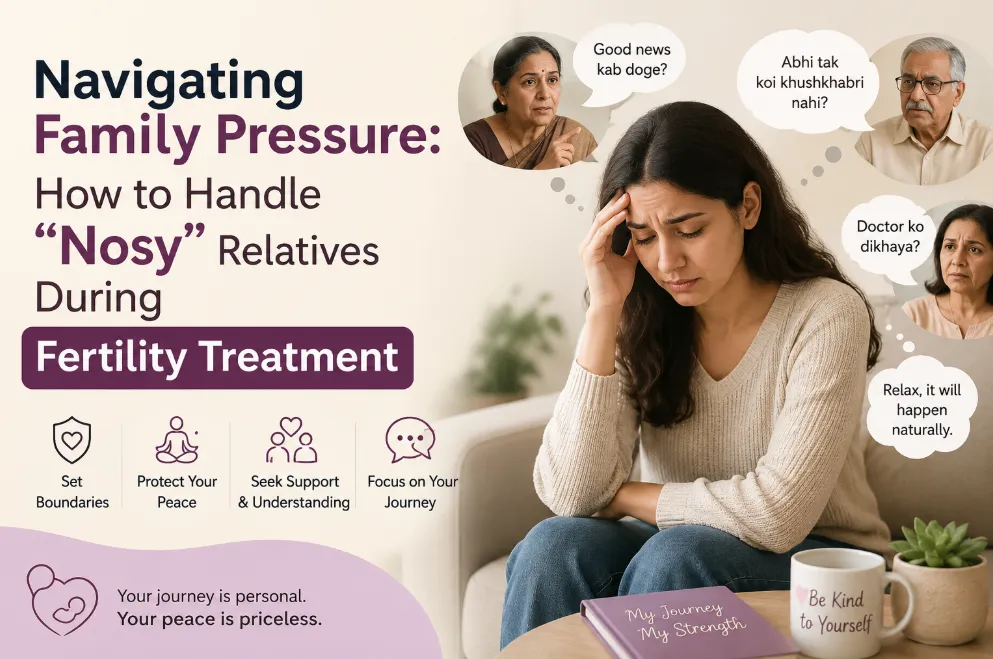
It often begins with a harmless-sounding question.
“So… any good news?”
At a wedding.
A temple visit.
A family lunch.
Or sometimes, over a WhatsApp family group where everyone suddenly becomes emotionally invested in your reproductive timeline.
For couples going through fertility struggles, especially in India, infertility is rarely experienced privately.
It unfolds publicly.
Parents worry. Relatives speculate. Friends compare timelines. Someone always seems to know “one doctor” or “one home remedy” that supposedly worked for another couple.
And while most relatives mean well, repeated questions can slowly become emotionally exhausting.
Because when you are already navigating fertility treatment, uncertainty, scans, hormones, or failed cycles, the last thing you need is social pressure disguised as concern.
At a best fertility hospital in chennai, one emotional pattern fertility specialists hear repeatedly is not just medical anxiety – but family pressure.
“We haven’t even told people we’re trying anymore.”
“We avoid functions now.”
“My mother-in-law keeps asking for updates.”
“We’re emotionally tired.”
And honestly, that exhaustion makes sense.
Because infertility in India is not just medical.
It is social.
Why Fertility Pressure Feels So Intense in Indian Families
In many Indian households, marriage and parenthood are deeply connected.
After marriage, there is often an unspoken timeline:
First year? Questions begin.
Second year? Advice starts arriving.
Third year? Concern turns into pressure.
And unlike Western cultures where fertility is often considered private, Indian family systems tend to operate collectively.
Everyone feels involved.
Parents worry about grandchildren.
Relatives compare timelines.
Family elders offer unsolicited remedies.
Sometimes comments sound casual:
“Just relax – it’ll happen.”
“You’re focusing too much on career.”
“Try naturally before treatment.”
“Why wait?”
But for someone quietly going through fertility struggles, these questions can feel painfully invasive.
Especially when treatment is already emotionally demanding.
The Hidden Emotional Cost of “Nosy” Questions
Most people think infertility stress comes only from medical treatment.
Hormones. Scans. IVF cycles. Test reports.
But social stress matters too.
Repeated questioning can trigger:
● Anxiety
● Shame
● Emotional withdrawal
● Relationship tension
● Social avoidance
● Depression-like symptoms
Many couples start skipping family functions entirely.
Not because they dislike people.
But because they feel emotionally cornered.
Every gathering becomes emotionally risky.
Someone will ask.
Someone always asks.
And after enough uncomfortable moments, couples stop feeling emotionally safe in social settings.
The Truth: Most Relatives Are Not Trying to Hurt You
This part matters.
Not all intrusive comments come from cruelty.
Sometimes relatives ask because:
● They care
● They are worried
● They do not understand fertility struggles
● They grew up in a generation where boundaries were different
That does not make the comments easier.
But reframing intention can sometimes reduce emotional anger.
Instead of:
“They are attacking us.”
It may help to think:
“They don’t know how painful this feels.”
That shift creates emotional distance from the comment itself.
And emotional distance is powerful.
Why You Don’t Owe Anyone Medical Updates
One of the healthiest mindset shifts during fertility treatment is this:
You are allowed to protect your privacy.
You do not owe anyone:
● Fertility timelines
● Scan results
● Treatment details
● IVF updates
● Medical explanations
Many couples feel pressured to over-explain.
But privacy is not secrecy.
Privacy is emotional self-protection.
Simple responses often work best:
“We’re figuring things out.”
“We’ll share when there’s news.”
“Everything is under control.”
“Thank you for checking in.”
Short. Calm. Polite.
No debate required.
You are not obligated to educate every relative.
Create a “United Front” as a Couple
One major mistake couples make during fertility treatment is handling family pressure separately.
For example:
One partner absorbs pressure from parents.
The other partner stays silent.
Over time, resentment builds.
Healthy couples usually approach family dynamics as a team.
That means deciding together:
● What to share
● What to keep private
● How to respond to questions
● When to establish boundaries
Sometimes one supportive sentence from a spouse matters deeply:
“We’ll update everyone when we’re ready.”
That emotional solidarity can reduce enormous stress.
Because infertility is hard enough.
You should not feel alone inside your own marriage too.
Stop Internalising Other People’s Timelines
This may be the hardest part.
In India especially, fertility comparisons happen constantly.
“Your cousin already has two children.”
“They married after you.”
“Everyone keeps asking.”
But fertility is not a race.
And comparison often deepens emotional pain unnecessarily.
Behind many pregnancies you admire, there may also have been:
● Miscarriages
● Fertility treatment
● Hormonal struggles
● IVF cycles
● Years of waiting
You rarely know the full story.
Social pressure often makes couples feel “late.”
But medically, fertility treatment is about timing based on biology – not family expectations.
When Boundaries Become Necessary
Some relatives repeatedly cross emotional lines.
The constant advice.
Repeated fertility questions.
Judgmental comments.
In those cases, stronger boundaries may be necessary.
That can look like:
Changing the topic.
Reducing personal sharing.
Skipping emotionally draining conversations.
Politely declining certain discussions.
Boundaries are not disrespect.
They are emotional protection.
Especially during something as vulnerable as fertility treatment.
Fertility Treatment Is Already Emotionally Heavy
Trying to conceive after months or years of disappointment can affect every part of life.
Mental health.
Marriage.
Confidence.
Identity.
This is why emotional support matters alongside medical care.
Increasingly, fertility specialists recognise that infertility is not just hormonal or biological.
It affects emotional wellbeing too.
Many infertility specialist in Chennai, and many fertility teams now acknowledge that psychological stress, relationship strain, and family pressure often shape the patient experience just as much as treatment itself.
Because healing during fertility treatment is not only physical.
It is emotional too.
Final Thought
You cannot always stop people from asking uncomfortable questions.
But you can decide how much access they have to your emotional energy.
Infertility already asks a lot of couples.
Patience. Hope. Courage. Vulnerability.
You do not have to carry social pressure on top of that.
And sometimes, the healthiest response to family pressure is not confrontation.
It is quiet confidence.
A reminder that your fertility journey belongs to you and your partner – not the opinions, timelines, or expectations of everyone around you.
Because no matter how loud outside voices become, this journey is still yours to navigate, in your own time.